
Shopping cart

close
Tel : 94870 36000, 94860 36000, 94890 36000

How to Choose the Best Solar Panels Solutions for Your Home?

Choosing the right solar panels solutions for your home can be a daunting task. With so many options, how do you select the best one? Industry expert John Smith once stated, "Not all solar solutions are created equal; each home has unique needs." This insight resonates deeply with homeowners looking to invest wisely.

When considering solar panels solutions, it’s crucial to analyze your energy needs. Every family has different usage patterns. The size and orientation of your home play significant roles in determining the right system. Researching local regulations and incentives is also vital. They can greatly affect your final decision.

Reflecting on the long-term benefits is essential. Solar panels can reduce energy bills, but installation costs can be a concern. Consider the best financing options. Striking a balance between cost and efficiency isn’t easy but is necessary. Engaging with multiple providers allows for better comparisons. Remember, knowledge will empower your choices in solar panels solutions.
How to Choose the Best Solar Panels Solutions for Your Home?

Understanding Solar Panel Types: Monocrystalline vs. Polycrystalline
How to Choose the Best Solar Panels Solutions for Your Home?

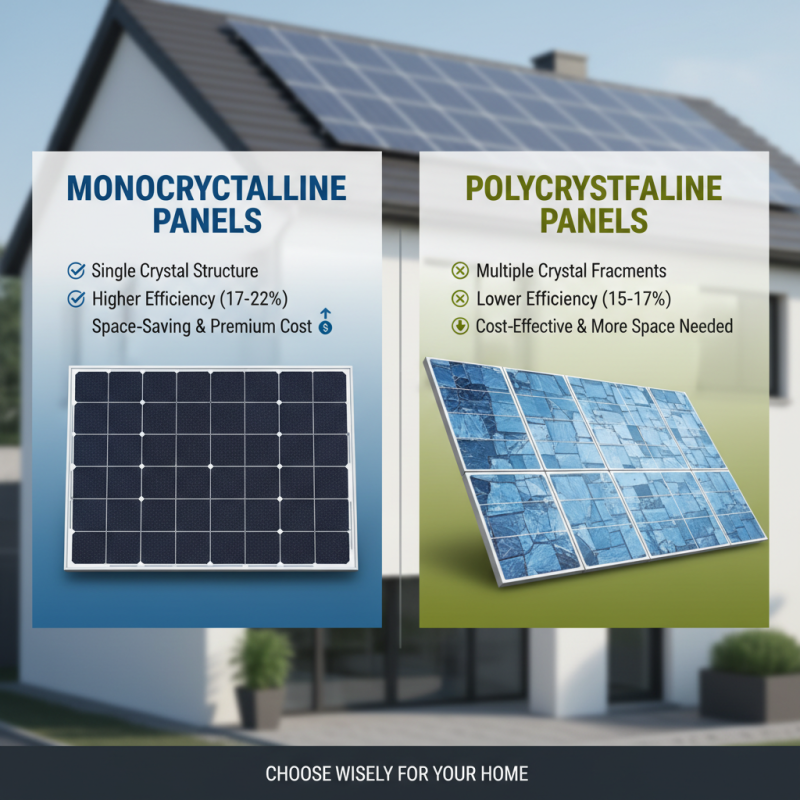
When selecting solar panels for your home, it’s essential to understand the differences between monocrystalline and polycrystalline types. Monocrystalline panels are made from a single crystal structure. This allows for more efficient energy conversion. They typically take up less space due to their higher energy output. However, they do come at a higher price.

On the other hand, polycrystalline panels consist of multiple crystal structures. These are generally more affordable and have a lower energy efficiency compared to monocrystalline options. They might require more space on your roof to generate the same amount of power. A crucial aspect to reflect on is the efficiency versus cost ratio that fits your budget and energy needs.

Consider your roof’s orientation and shading as these factors play a huge role in performance. If your roof gets ample sunlight, polycrystalline panels could be a cost-effective choice. But if space is limited and energy efficiency is key for you, monocrystalline might be worth the investment. Think through your specific situation carefully before making a choice.

Evaluating Solar Panel Efficiency Ratings: How They Affect Performance

When evaluating solar panel efficiency ratings, understanding how these numbers translate to performance is crucial. Efficiency ratings indicate how much sunlight a panel can convert into usable electricity. A panel with a higher efficiency rate might seem the better choice, but this is not always the entire picture. Factors such as location, weather patterns, and roof orientation can influence performance significantly.

Consider a product with an efficiency rating of 20%. It might generate more energy on sunny days. However, if you live in an area with frequent snowfall or rainy weather, this panel may not perform as expected. Efficiency alone doesn’t guarantee optimal energy production. Reflect on your home’s specific conditions. Sometimes, choosing a panel with a slightly lower rating might offer a better return on investment when considering local weather and sunlight exposure throughout the year.

Balancing efficiency with practicality can be challenging. New technology develops rapidly, and what is efficient today may change tomorrow. Research consistently shows that some less efficient models can outperform their rivals if partnered with the right inverter or system design. Always ask the right questions. Which panel suits your needs best? Is it worth prioritizing raw efficiency over versatility?

Assessing Your Home's Energy Needs: Calculating Solar Panel Requirements

Assessing your home's energy needs is crucial when considering solar panels. Start by analyzing your monthly electricity bill. Look for the kilowatt-hours you use each month. This number will guide your solar panel requirements. If your home's needs vary, consider seasonal changes. Some months may require more energy than others.

Next, think about the size of your roof and its orientation. Does it receive ample sun? A small roof might mean fewer panels. This could limit energy production. Also, consider shading from trees or buildings. It can significantly reduce efficiency. Evaluate any potential barriers that may affect sunlight exposure.

Lastly, reflect on your future energy usage. Will you add more appliances? Or perhaps buy an electric vehicle? These factors can impact your calculations. It's essential to choose a solution that meets current needs, while also allowing for growth. Balancing your immediate needs with future plans is key to making the best decision.

Exploring Solar Panel Costs and Savings: Initial Investment vs. Long-term Benefits

When considering solar energy for your home, it's vital to analyze costs and savings. The initial investment can be significant. On average, the cost of residential solar panel installation ranges between $15,000 to $25,000. This figure may seem daunting, but many homeowners underestimate the long-term savings. Studies show that homeowners can reduce their electricity bills by up to 70% with solar energy. Notable data reveals that solar panels can increase home value by approximately 4%.

Tips: Research local incentives. Many states offer tax credits or rebates, which can alleviate upfront costs significantly. Don’t neglect to check your roof's suitability. A south-facing slope is ideal for maximum sun exposure.

While the savings are compelling, it’s essential to look closer. Maintenance is often overlooked. Panels may require cleaning and occasional repairs. Moreover, solar energy production can vary based on weather and location. Some regions may not see as much saving due to less sunlight.

Tips: Get multiple quotes from installers. Prices can vary widely. Always read customer reviews to gauge reliability. Calculating your break-even point can also clarify potential financial outcomes.

How to Choose the Best Solar Panels Solutions for Your Home?

Criteria Solar Panel Type Initial Cost ($/kW) Efficiency (%) Warranty (years) Estimated Savings ($/year)
Monocrystalline High Efficiency 3000 21 25 600
Polycrystalline Moderate Efficiency 2500 15 25 500
Thin-Film Lower Efficiency 2000 12 10 300

Selecting Reputable Solar Panel Brands: Industry Leaders and Certifications

When selecting solar panel solutions for your home, reputable brands play a vital role. Industry leaders often possess extensive experience. Certifications can guide your decision, but they can be complex. According to a recent report by the Solar Energy Industries Association, over 80% of homeowners based their choices on brand reputation.

Look for companies with certifications from credible organizations. These might include UL and CSA. These marks ensure safety and efficiency. Not all solar panels are created equal. Some may promise high performance but deliver less than expected. Research indicates that panels from certified manufacturers yield an average efficiency of 18% to 22%.

Tip: Compare warranty offerings. A longer warranty can indicate reliable performance. Many reputable brands offer warranties of 25 years.

Beware of brands with overly aggressive marketing. They may not have proven track records. Reading reviews can reveal the true performance of these products. Selecting the right solar panels requires patience and diligence. Not every well-advertised brand is trustworthy.

Comparison of Solar Panel Efficiency Ratings by Category

This chart illustrates the efficiency ratings of different types of solar panels, highlighting how monocrystalline panels generally offer the highest efficiency compared to polycrystalline and thin-film options. Understanding these differences can assist homeowners in selecting the best solar panel solutions for their energy needs.

Contact Us
close slider
Scroll To Top